Powdered Peptides vs. Pre-Made Solutions: Which Research Format Fits Your Lab?
Understanding the Two Formats for Research Peptide Storage
When you work with research peptides, one of the first practical decisions you face is whether to start with a lyophilized powder or a ready-to-use liquid solution. Both formats serve the same end goal, providing a high-purity peptide for your experiments, but they differ significantly in how you store, handle, and reconstitute them. The choice affects everyday lab workflow, especially when you consider the demands of proper research peptide storage.
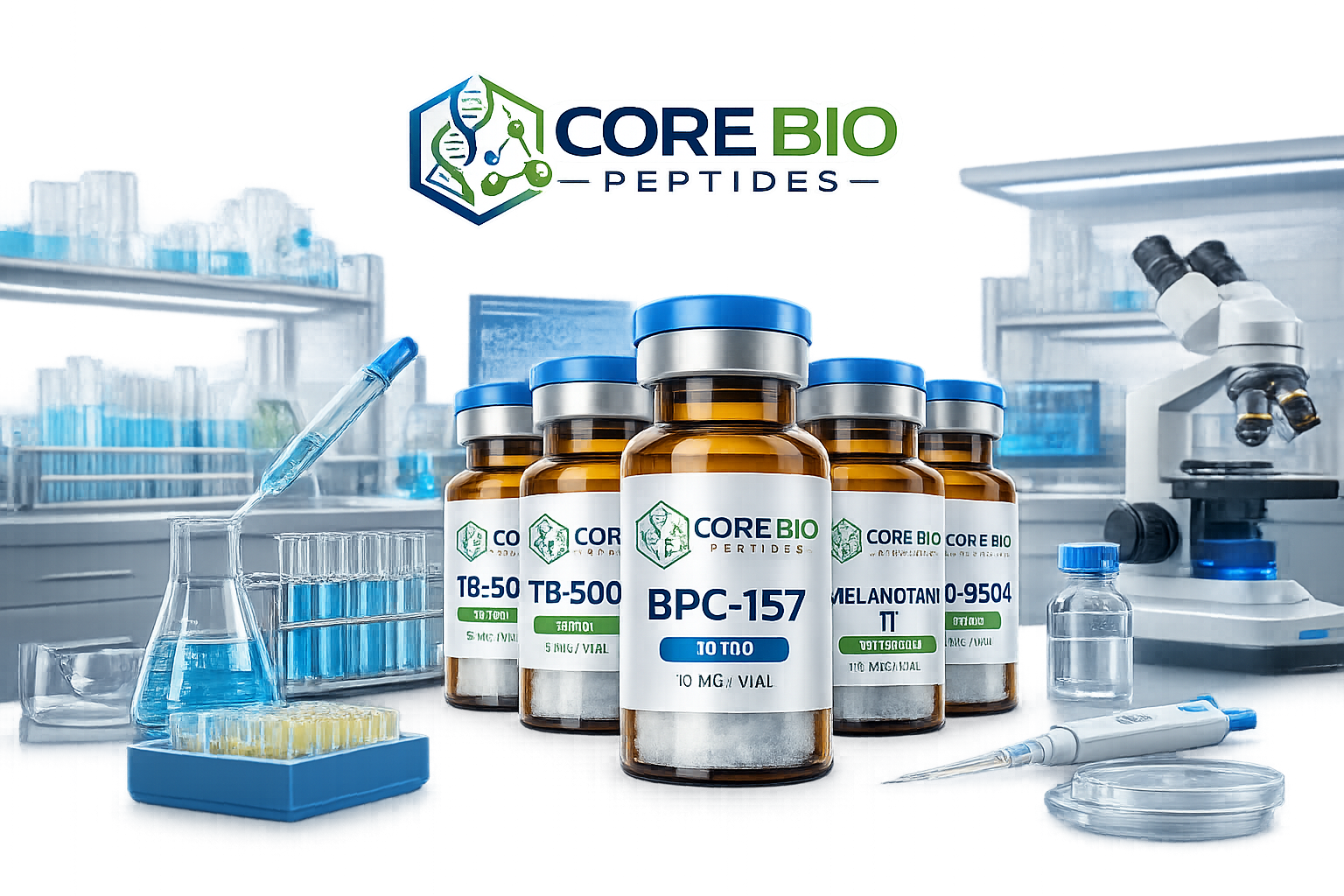
Lyophilized peptides arrive as a dry, fluffy powder sealed under vacuum or inert gas inside a sterile vial. This form is designed for long-term stability. The absence of water greatly slows chemical degradation, so the peptide remains intact for months or even years when kept in the right conditions. Prepared solutions, on the other hand, come already dissolved in a specified buffer or solvent, often at a known concentration. They offer convenience but introduce a shorter shelf life and stricter storage requirements.
How Storage Conditions Differ
The main difference between the two formats lies in how they respond to environmental factors such as temperature, moisture, and light. Research peptide storage for powdered material focuses on excluding water and keeping the vial cool. Even a brief exposure to humidity can cause the powder to clump or start hydrolyzing, which alters the peptide's structure and reduces its activity. For this reason, manufacturers pack lyophilized peptides with a desiccant and recommend storing them in a freezer at -20°C or below. The vial should be allowed to warm to room temperature before opening to prevent condensation from forming on the powder.
Prepared solutions, being already hydrated, are more vulnerable to microbial growth and chemical breakdown. Most peptide solutions require refrigerated storage at 2-8°C, and many need protection from light to prevent photodegradation. Freezer storage is not always an option because freezing and thawing can cause the peptide to precipitate or lose activity. Once a solution is opened, its usable life may be only a few days to a few weeks, even under ideal conditions. This makes careful planning essential: you need to know how much solution you will use in a short period before ordering or preparing it.
Handling and Reconstitution
Working with powdered peptides demands a few extra steps but gives you more control. You must reconstitute the powder by adding a sterile solvent, often water for injection, saline, or a specific buffer, directly into the vial. The choice of solvent matters because some peptides dissolve poorly in plain water and require a small amount of acetic acid or another mild agent. You then need to mix gently, usually by swirling or brief vortexing, until the powder is fully dissolved. This step requires care: excessive foaming or vigorous shaking can denature the peptide.
Once reconstituted, the solution is functionally identical to a pre-made one. The difference is that you decide the concentration, which can be helpful if your protocol calls for a specific molarity or if you want to minimize the volume added to your assay. Prepared solutions remove this variability. They come at a certified concentration, saving time and reducing the risk of error during reconstitution. For labs that run high-throughput assays or that lack experience with peptide handling, pre-made solutions simplify the workflow considerably.
Shelf Life and Stability Trade-Offs
The most significant trade-off between the two formats is shelf life. Lyophilized peptides, when stored properly in a freezer with a desiccant, can remain stable for years. This makes them ideal for building a library of research compounds that you may use only occasionally. You can order a larger batch once and draw from it over many experiments, confident that the peptide will still be active when you need it. Shanghai Synthetic Peptides Bio, for example, supplies high-purity research peptides in lyophilized form, which allows laboratories to store them for extended periods without worrying about loss of activity.
Prepared solutions, in contrast, have a short window of usability. Even when refrigerated and protected from light, most peptide solutions degrade within a few weeks to a few months. Some labs address this by aliquoting the solution into smaller tubes and freezing them, but repeated freeze-thaw cycles can damage the peptide. This limitation means that prepared solutions are best suited for experiments that will be completed within a short timeframe, or for peptides that are used so frequently that a fresh solution is prepared every few days.
When Each Format Makes Sense
Choosing between powdered and prepared formats depends on your specific research needs. Consider the following scenarios:
- Low-frequency use: If you run experiments with a given peptide only once every few months, lyophilized powder is the practical choice. It stays stable in the freezer until needed, and you reconstitute only the amount required for that experiment.
- High-throughput screening: When you need to test many peptides in a single session, pre-made solutions save time. You can skip the reconstitution step and proceed directly to dosing.
- Concentration sensitivity: If your assay demands a precise, reproducible peptide concentration, a certified pre-made solution eliminates the variability of manual reconstitution. On the other hand, powder gives you the flexibility to adjust concentration as needed.
- Limited freezer space: Lyophilized peptides require freezer storage, which may be at a premium in some labs. Prepared solutions need only refrigeration, which is more widely available.
- Short-term projects: For a three-week experiment, a prepared solution is often sufficient and more convenient. You avoid the extra handling steps and the risk of reconstitution errors.
Each format has its place. Many labs keep a core set of frequently used peptides as pre-made solutions and maintain a deeper inventory of less common peptides as lyophilized powders. This hybrid approach balances convenience with long-term stability.
Practical Tips for Research Peptide Storage
Regardless of which format you choose, following good storage practices extends the life of your peptides. For lyophilized powders, always store the vial in a freezer at -20°C or below. Place the vial inside a sealed plastic bag with a desiccant pack to control moisture. Before opening the vial, let it warm to room temperature inside the bag to prevent condensation. After removing the needed amount of powder, purge the vial with argon or nitrogen if possible, then reseal and return it to the freezer immediately.
For prepared solutions, store them in a refrigerator at 2-8°C and protect them from light by wrapping the vial in aluminum foil or using amber glass. Avoid repeated opening of the vial; instead, aliquot the solution into smaller sterile tubes so that each tube is used only once. If you must freeze a solution, do so in single-use aliquots and thaw only what you need. Never refreeze a thawed aliquot.
Moisture exposure is the enemy of both formats, but it affects powder more acutely. Even a small amount of humidity can cause the powder to cake or degrade. Desiccants help, but the best defense is to minimize the time the vial is open. Work quickly, and keep the vial capped whenever possible. Light sensitivity varies by peptide; some are highly photolabile and require amber vials or foil wrapping even in powder form. Check the manufacturer's recommendations for each peptide you handle.
Making the Decision
There is no universal answer to which format is better. The decision rests on your laboratory's workflow, the frequency of use, and the stability requirements of the specific peptide. Lyophilized powder offers unmatched shelf life and flexibility, making it the standard for long-term storage and for peptides used intermittently. Prepared solutions provide speed and consistency, which is valuable in high-throughput settings or for researchers who prefer a ready-to-use product.
Suppliers such as Shanghai Synthetic Peptides Bio offer both formats, allowing you to choose based on your experimental needs. When ordering, consider not just the immediate experiment but also how you will store the peptide over the coming months. If you are unsure, starting with the lyophilized powder gives you the most options: you can store it indefinitely and reconstitute it only when needed. Prepared solutions, while convenient, commit you to using the peptide within a shorter timeframe. By understanding these trade-offs, you can select the format that best supports your research goals.
Ends · THERESEARCHBENCH